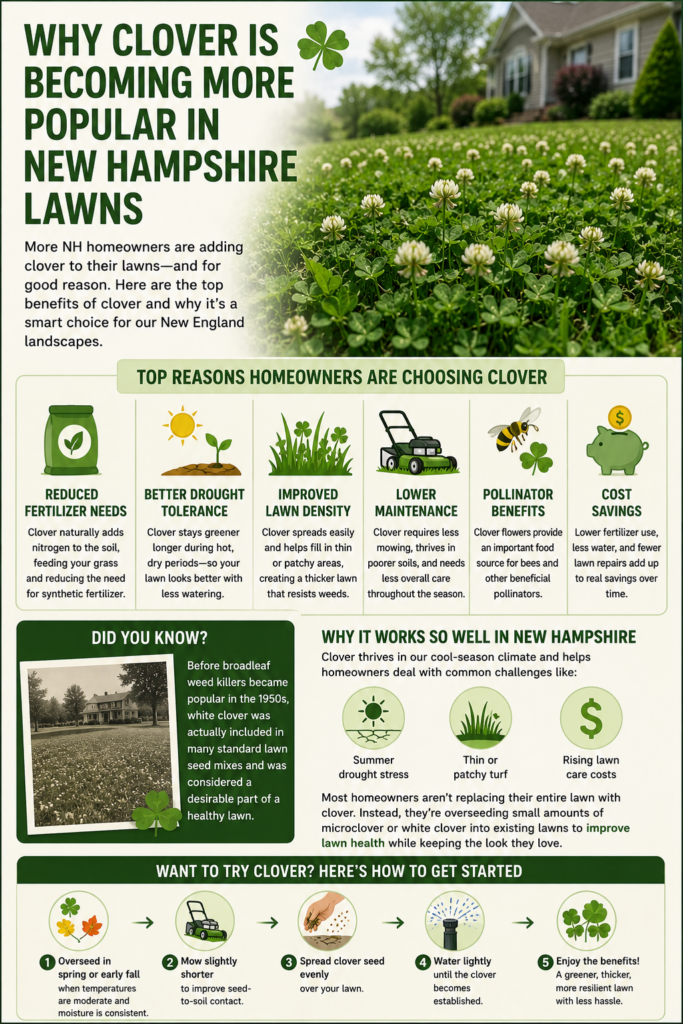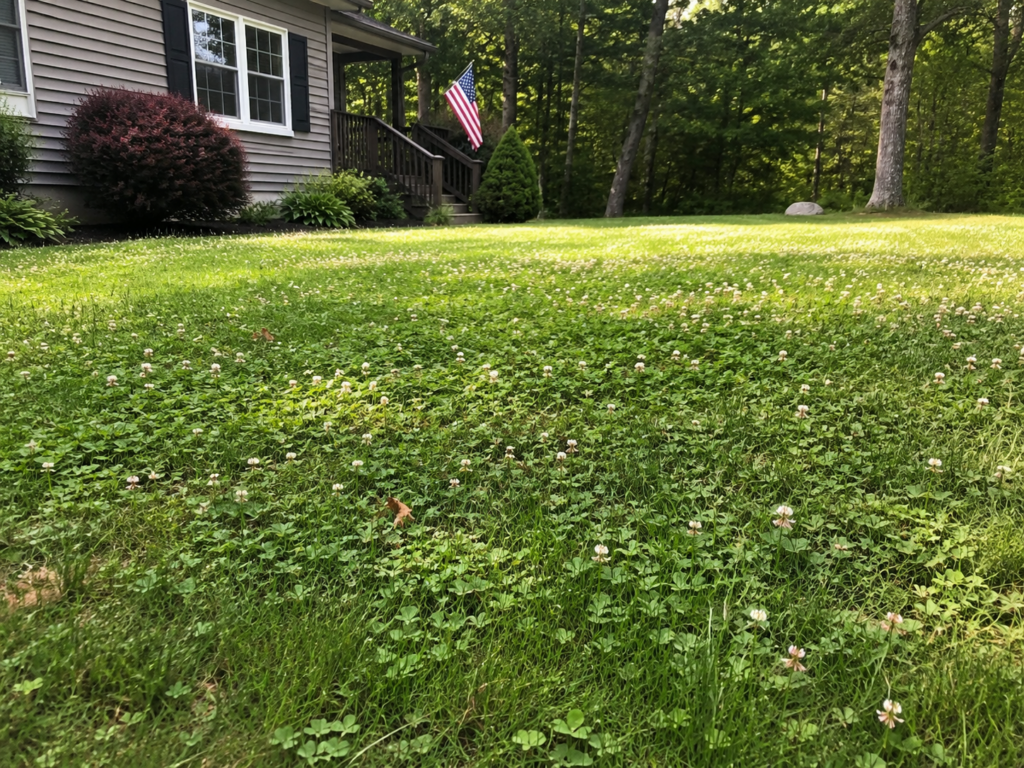
Clover lawns are becoming increasingly popular across New Hampshire, and for good reason. Homeowners are looking for ways to create healthier, greener lawns while reducing water usage, fertilizer costs, and maintenance. Here are some Frequently Asked Questions about Adding Clover to Your Lawn!
Will Adding Clover Take Over My Entire Lawn?
Not necessarily. Many homeowners choose to overseed their existing lawn with a small amount of clover rather than replacing their grass entirely. A grass and clover mix can provide the benefits of both plants while maintaining the traditional lawn appearance most homeowners prefer. In many cases, adding just 5% to 10% clover seed to a lawn can make a noticeable difference.
Does Adding Clover Really Help My Lawn?
Yes!
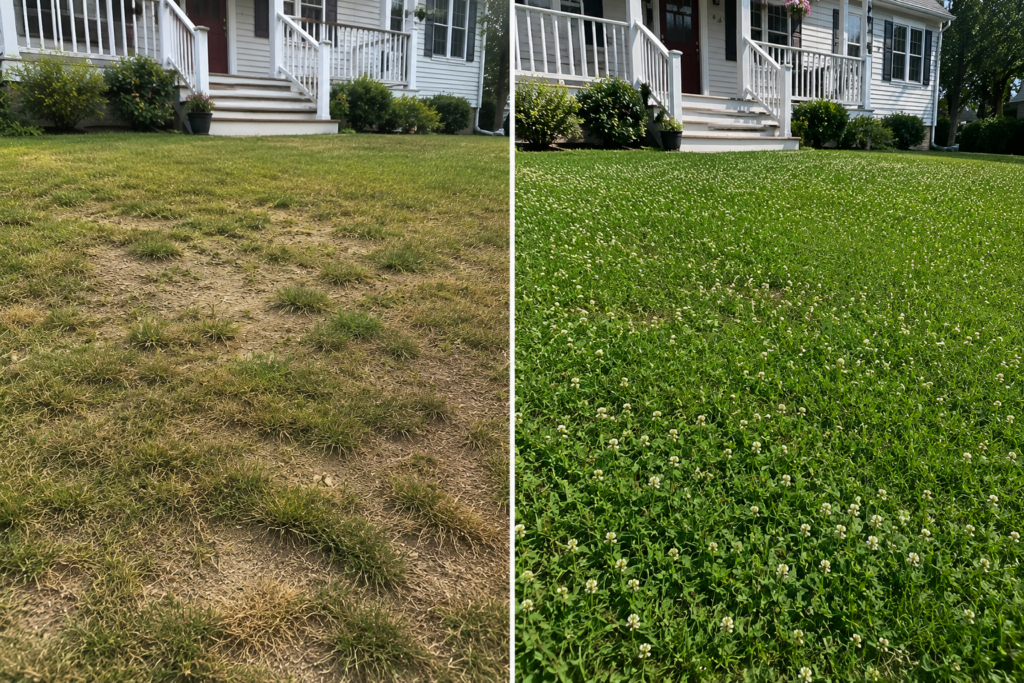
- Clover naturally adds nitrogen to the soil, which helps support healthy grass growth.
- This can also reduce the amount of fertilizer your lawn needs throughout the season.
- Clover is also drought tolerant and tends to stay green longer during dry summer weather, making it a great option for New Hampshire lawns.
Will Clover Help Reduce Weeds?
A healthy stand of clover can help crowd out many common weeds. Clover grows densely and covers bare areas that weeds often use to establish themselves. While it won’t eliminate every weed, it can help create a thicker, healthier lawn that is naturally more resistant to unwanted growth.
Does Clover Attract Bees?
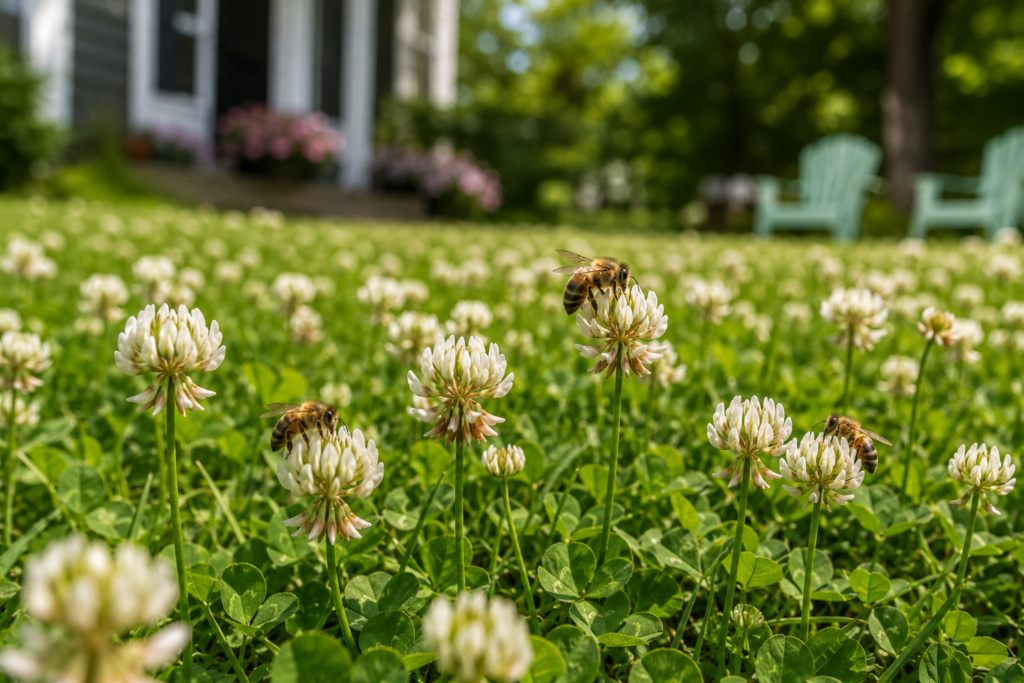
Yes, especially when it flowers. Many homeowners view this as a benefit because clover provides an important food source for pollinators. If you have children who frequently play barefoot in the yard, mowing before the flowers bloom can help reduce bee activity while still allowing you to enjoy the benefits of clover.
Tips to Successfully Adding Clover
Another Frequently Asked Question about Clover is When to seed. For the best results, overseed clover during the spring or early fall when temperatures are moderate and moisture is more consistent. Mow the lawn slightly shorter than normal before seeding to improve seed-to-soil contact. Keep the area lightly watered until the clover becomes established. Once it begins growing, you’ll likely notice a greener lawn, fewer bare spots, and improved drought resistance.
Is it Really Worth it? Are People Really Doing This?