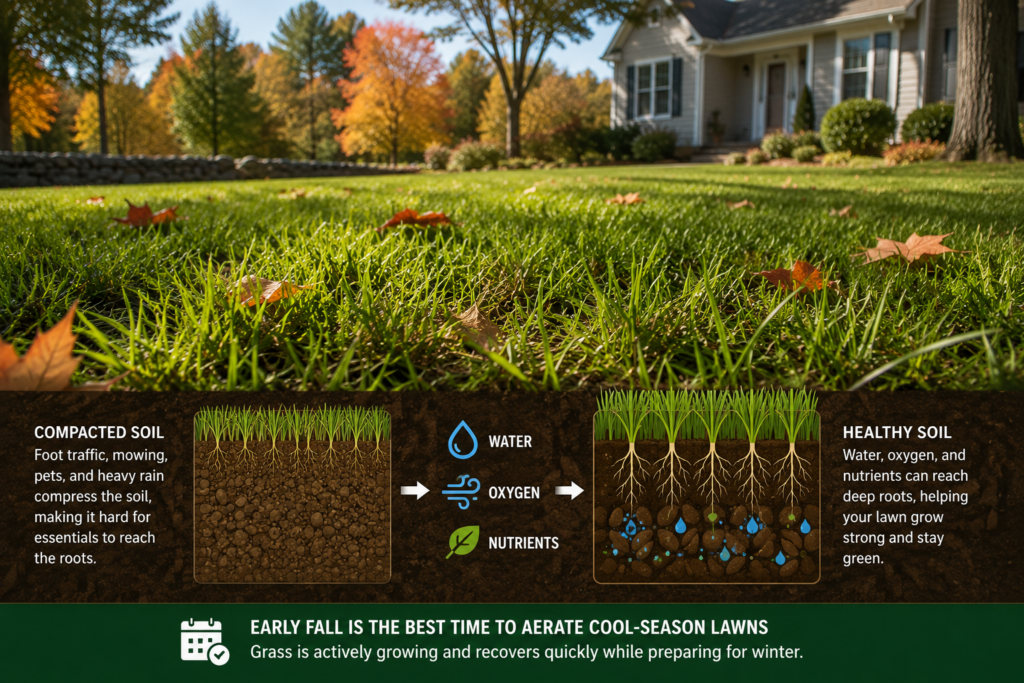
Many New Hampshire homeowners think watering and fertilizing are all a lawn needs to stay healthy, but healthy soil is just as important as healthy grass. Over time, foot traffic, mowing, pets, and even heavy rain can compact the soil beneath your lawn. When this happens, water, oxygen, and nutrients have a harder time reaching the roots. According to the University of New Hampshire Cooperative Extension, early fall is one of the best times to aerate cool-season lawns because the grass is actively growing and can recover quickly while preparing for winter.
How Often Should I Aerate My Lawn?
So how do you know if your lawn needs aeration? One simple test is to push a screwdriver into the ground after watering or rainfall. If it’s difficult to push more than a few inches into the soil, compaction is likely the problem. Other signs include puddles that linger after rain, thinning grass in high-traffic areas, or a lawn that dries out quickly even after watering. These symptoms often point to compacted soil rather than a lack of water. Core aeration removes small plugs of soil, allowing air, moisture, and nutrients to reach the root system more effectively.
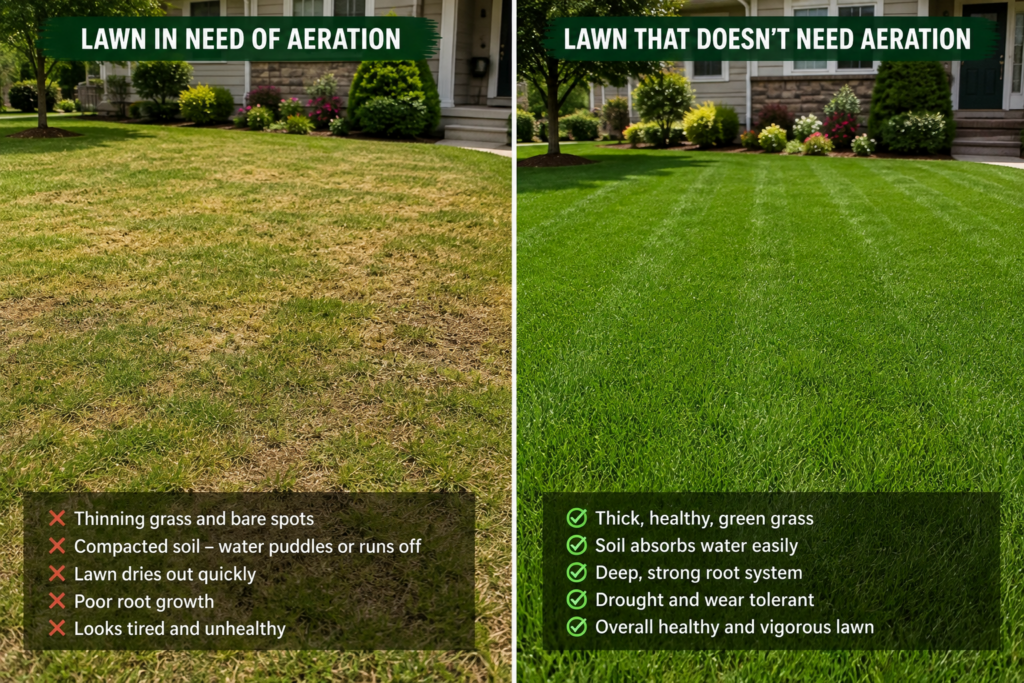
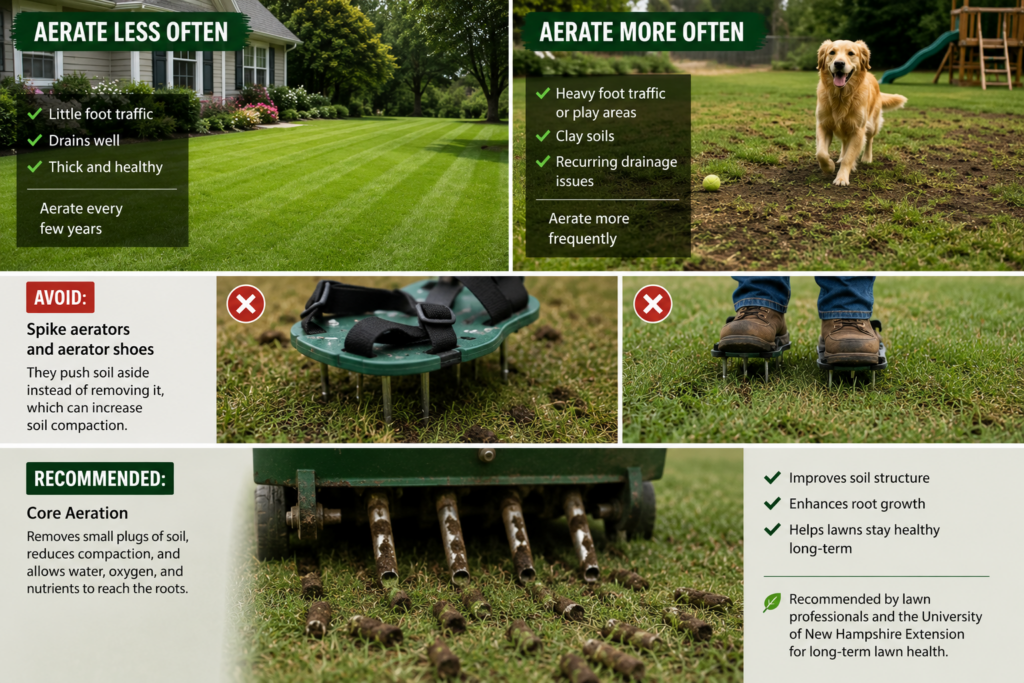
Not every lawn needs to be aerated every year! If your lawn has little foot traffic, drains well, and remains thick and healthy, you may only need to aerate every few years. However, lawns with heavy use, clay soils, or recurring drainage issues often benefit from more frequent aeration. One thing to avoid is spike aerators or aerator shoes. While they seem convenient, they can actually increase soil compaction because they push the soil aside instead of removing it. Core aeration is the method recommended by lawn professionals and the University of New Hampshire Extension for long-term lawn health.
After Aeration:
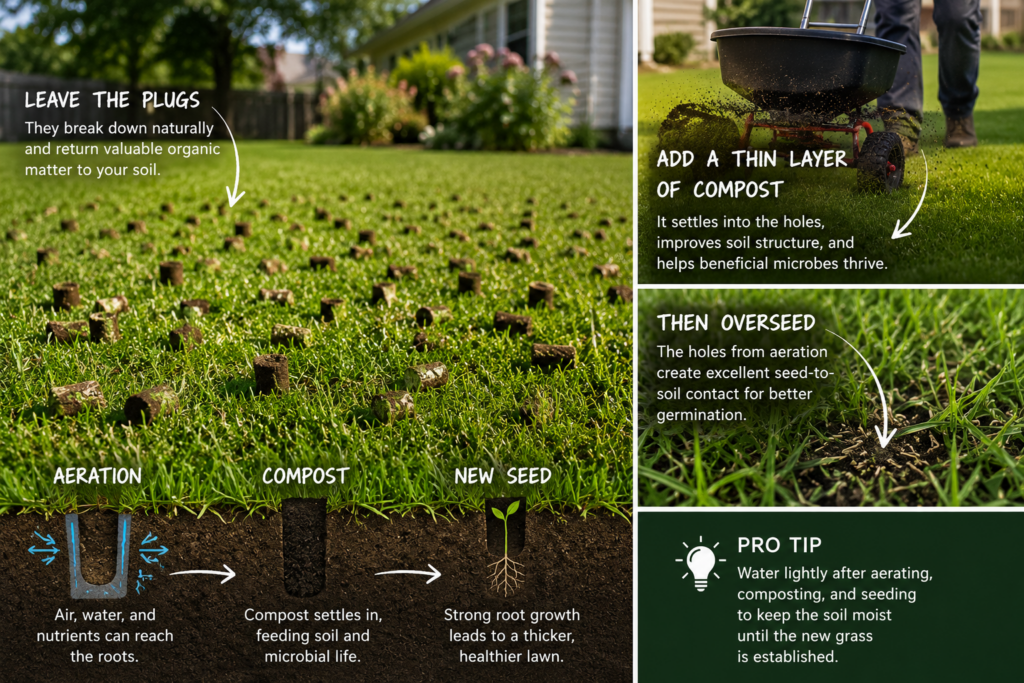
One little-known tip is to leave the soil plugs on your lawn after aeration. While they may look messy for a week or two, they naturally break down and return valuable organic matter to the soil. Another helpful trick is to spread a thin layer of compost immediately after aerating. The compost settles into the aeration holes, improving soil structure and helping beneficial microorganisms thrive. If your lawn has thin or bare areas, this is also the perfect time to overseed. The holes created by aeration provide excellent seed-to-soil contact, giving new grass a much better chance of establishing before winter.
Pro Tip!
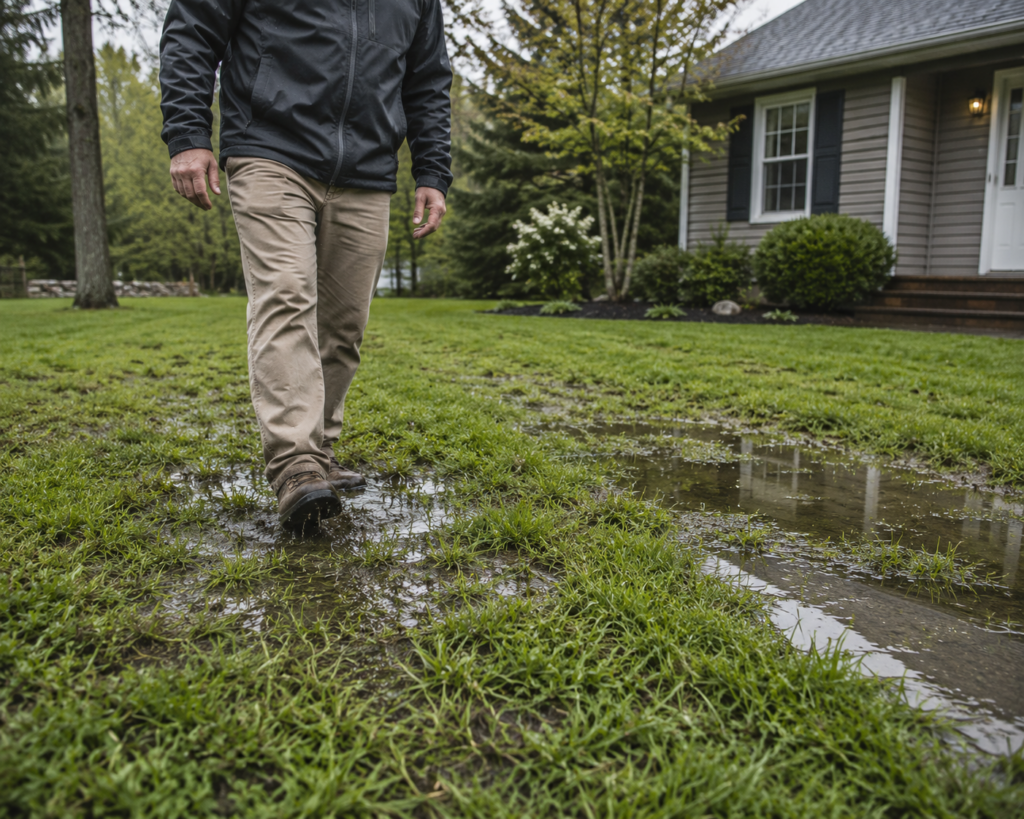
After a good rain, walk across your lawn. If water squishes under your feet or puddles remain the next day, don’t automatically assume you have a drainage problem. In many New Hampshire lawns, compacted soil is preventing water from soaking in. Aerating the lawn may solve the issue without the need for expensive drainage work!
Questions? We are here to help! Leave us a comment about your current landscaping project!