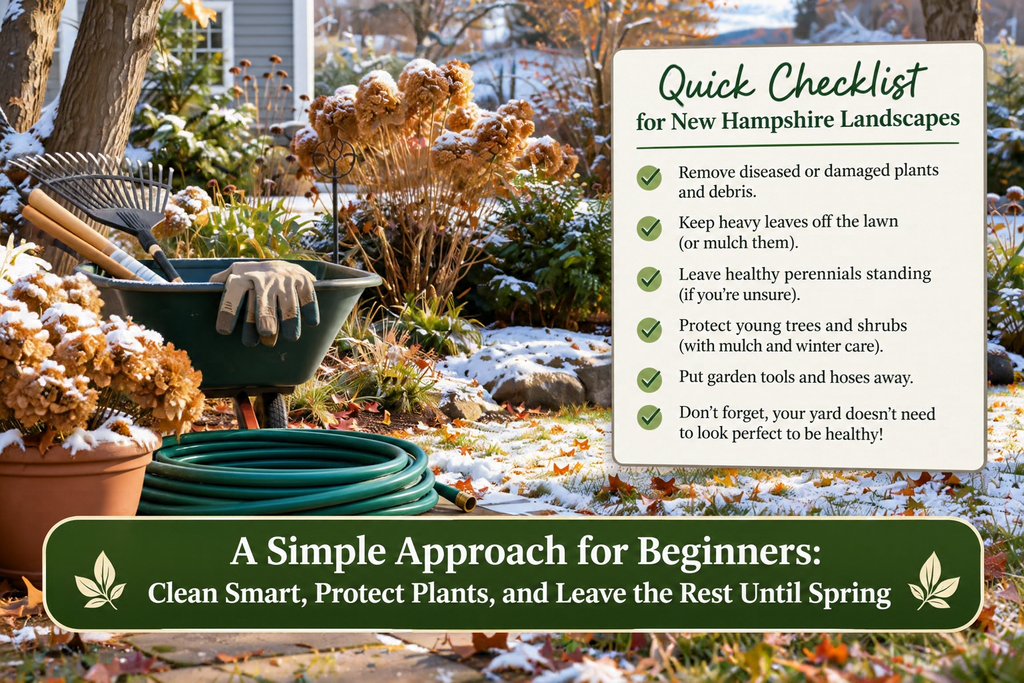
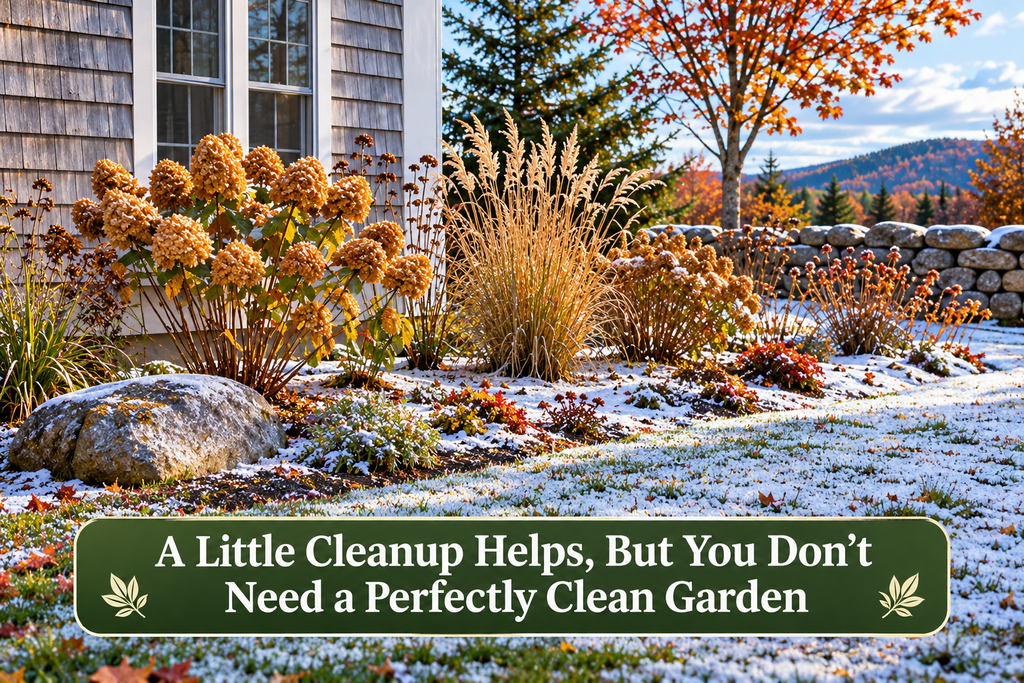
As winter approaches in New Hampshire, you may feel like your entire yard needs a major cleanup. But your garden beds do not need to be spotless before the snow arrives. In fact, cleaning up too much can remove natural protection for plants, insects, and wildlife. Focus on removing diseased or damaged plants and anything that could cause problems over winter. Healthy plants, leaves, and stems can often stay until spring. When in doubt, a little less cleanup may actually be better for your garden.
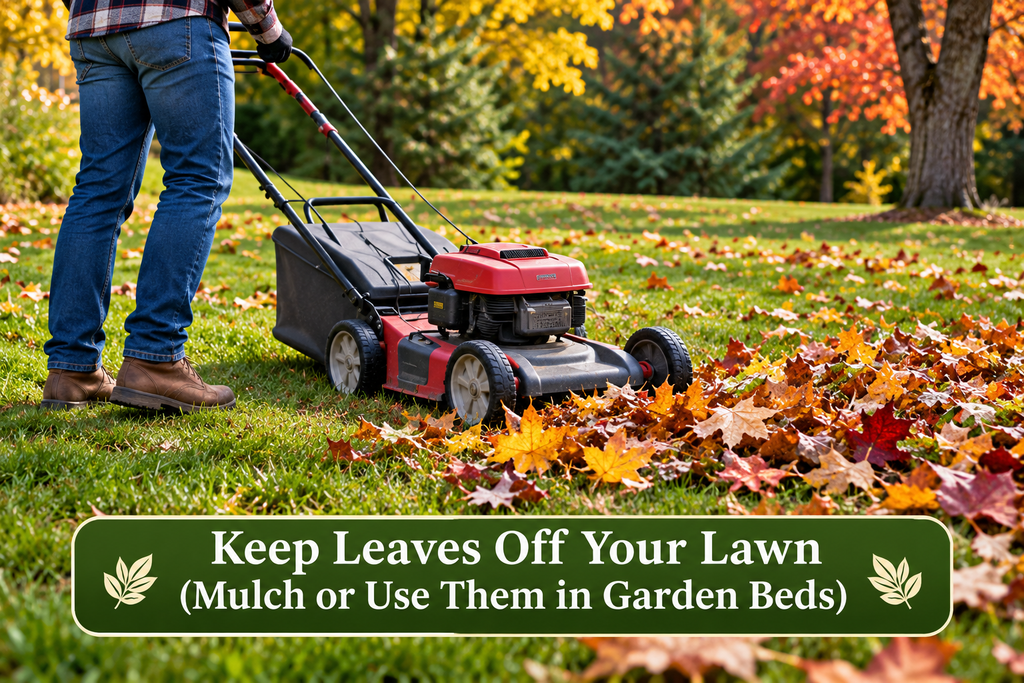
Start with your lawn. Thick layers of wet leaves should not sit on your grass all winter because they can block sunlight and trap moisture. Rake them up, mulch them with your mower, or move some into garden beds. Shredded leaves can act as a natural mulch around established plants. One beginner tip is to run your mower over dry leaves a few times instead of trying to bag every leaf. The smaller pieces break down faster and return organic matter to the soil.
Leaving some fallen leaves in your garden beds can save you time and help local wildlife. A 2025 study found that removing autumn leaves from residential yards reduced the number of insects and other arthropods emerging the following spring. Moths and butterflies were especially affected. Instead of removing every leaf, consider leaving some beneath trees and in garden beds. This simple step can provide valuable winter habitat while giving you less cleanup to do.
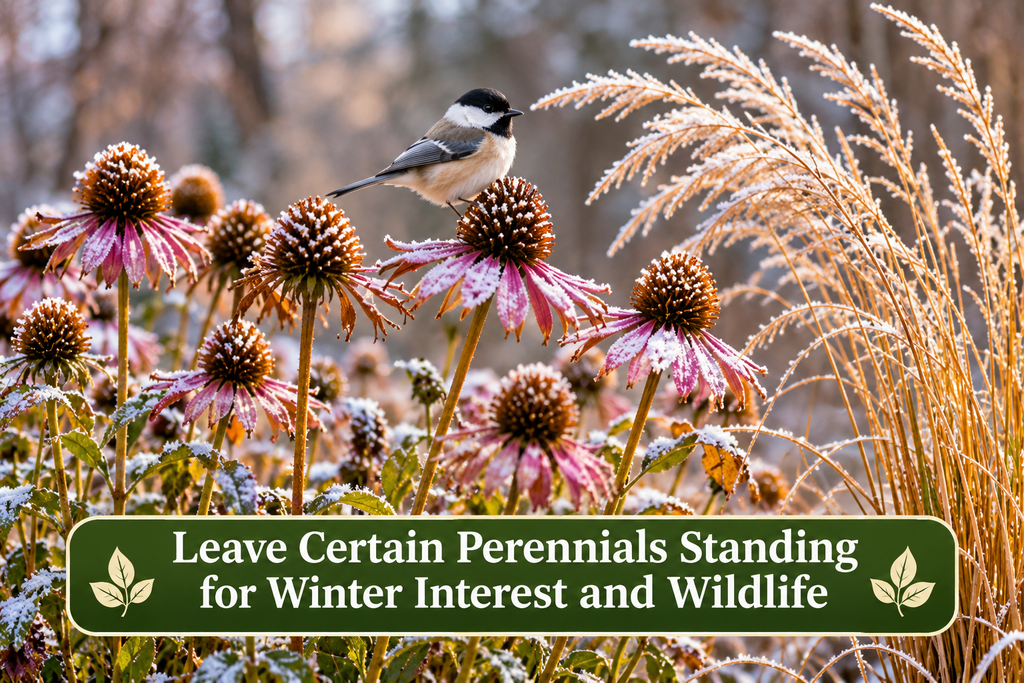
Some plants are better left standing. Ornamental grasses, coneflowers, black-eyed Susans, asters, and other sturdy perennials can provide winter interest, while their seeds may provide food for birds. Hollow or dried plant stems can also provide overwintering habitat for beneficial insects. You can wait until spring to cut many of these plants back. However, remove plants that are diseased, badly damaged, or covered in fungal growth. Do not put obviously diseased material into your garden beds as mulch.
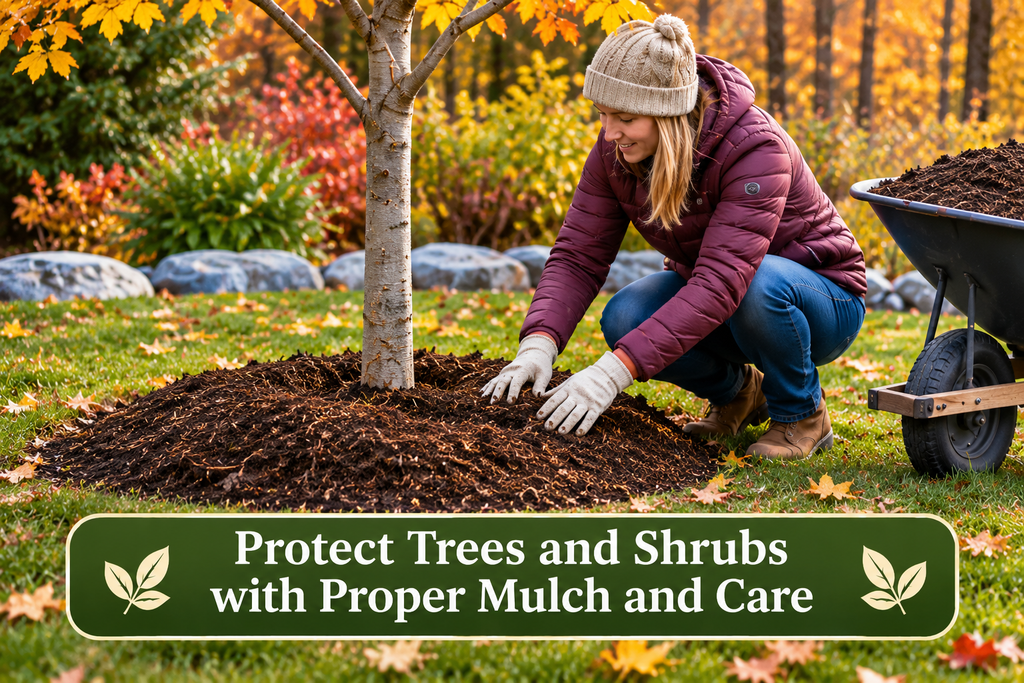
Fall is also a good time to protect plants rather than constantly pruning them. Check young trees and shrubs, remove broken branches, and make sure mulch is not piled against trunks or stems. A layer of mulch around the root area can help moderate soil temperatures, but keep it a few inches away from the trunk. If you planted trees or shrubs this year, continue watering them when the soil is dry until the ground freezes. Plants still need moisture going into a New Hampshire winter, even after their leaves have fallen.
If you are new to landscaping, keep your fall cleanup simple. Focus on the tasks that matter most. Remove diseased plants, clear heavy leaves from the lawn, and protect young trees and shrubs. Drain your hoses and store your garden tools before freezing temperatures arrive. Many healthy perennials can stay standing until spring. If you are unsure whether to cut something back, it is often better to leave it alone. You will save time while giving your garden extra protection through the winter.