For New Hampshire landscapes, the best type of garden bed dressing depends on the season, the look you’re after, and how much maintenance you’re willing to do. Let’s break it down!
For NH specifically, these are the mulch types you’ll most commonly see:
| Mulch Type | Best Use |
|---|---|
| Hemlock Mulch | Foundation beds, shrubs, general landscaping |
| Pine Bark Mulch | Acid-loving plants, rhododendrons, azaleas, blueberries |
| Hardwood Mulch | General garden beds and trees |
| Cedar Mulch | Long-lasting decorative beds |
| Black Dyed Mulch | High-contrast curb appeal |
| Brown Dyed Mulch | Natural appearance around homes |
| Pine Straw | Slopes, erosion control, naturalized areas |
| Peastone | Decorative beds, drainage areas |
| River Rock | Permanent decorative beds |
The Spruce Guide to Mulch Types
It compares organic mulches such as bark, pine bark, straw, and leaves against inorganic options such as gravel and stone, making it easy for homeowners to understand the pros and cons of each.
Now Let’s Talk Seasonal
Refreshing your garden bed dressings throughout the year helps keep plants healthier and landscapes looking their best. New Hampshire’s changing seasons can gradually break down mulch, compact soil, and reduce the effectiveness of your garden beds. A seasonal refresh helps maintain moisture, improve plant health, and keep your landscape looking clean, attractive, and well cared for year-round.
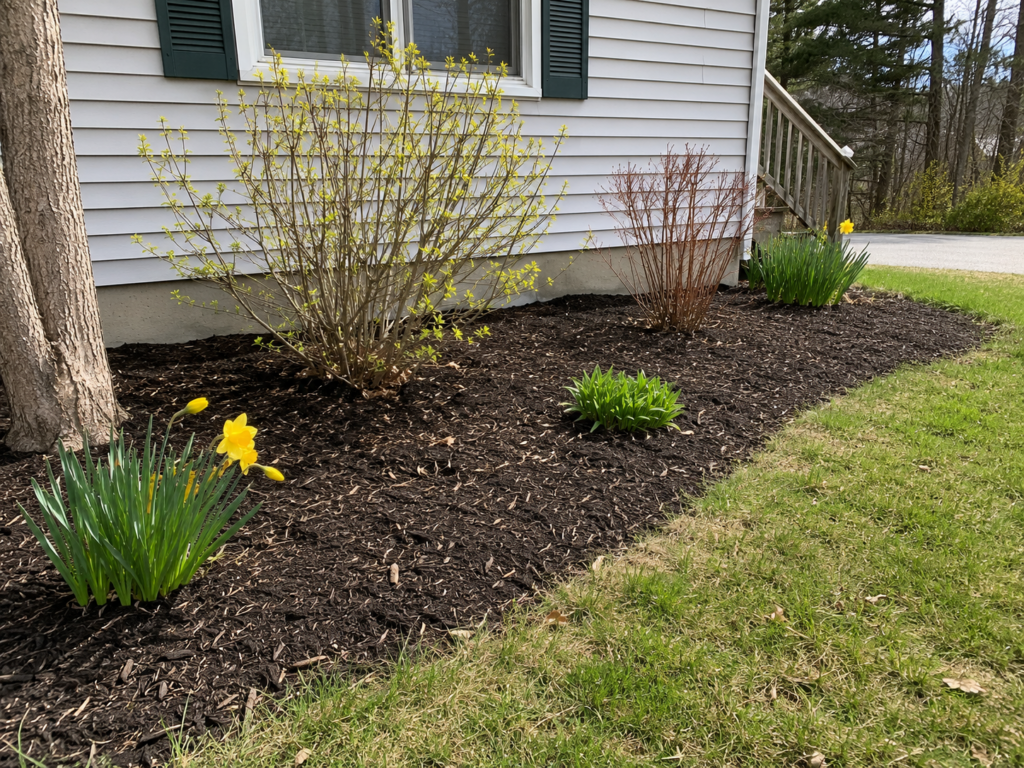
Spring: Mulch Is Usually Best
Why:
- Helps retain moisture as temperatures rise.
- Suppresses weeds before they emerge.
- Protects plant roots from temperature swings.
- Gives beds a clean, fresh appearance.
Popular choices:
- Dark bark mulch
- Hemlock mulch
- Pine bark mulch
Tip:
Apply 2 to 3 inches. More is not better.
Summer: Mulch Continues To Shine
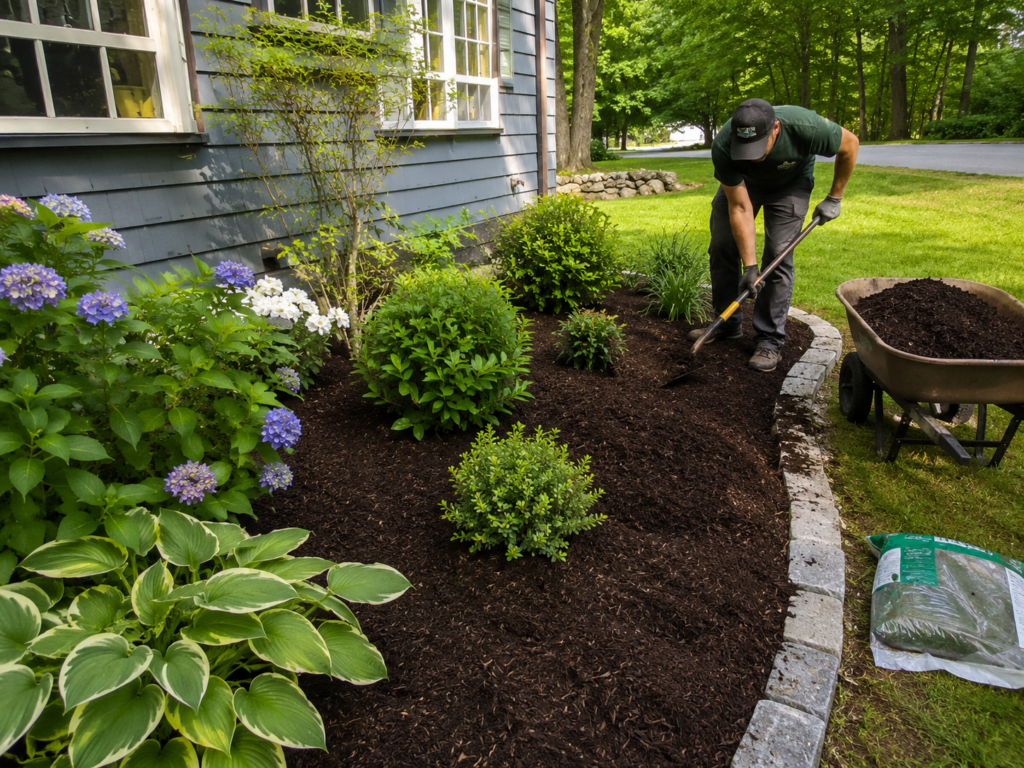
Why: Reduces watering needs during dry spells.
Keeps roots cooler.
Helps prevent soil from drying out.
Best for: Flower beds, Shrub beds, and Foundation plantings.
Fall: Mulch or Compost
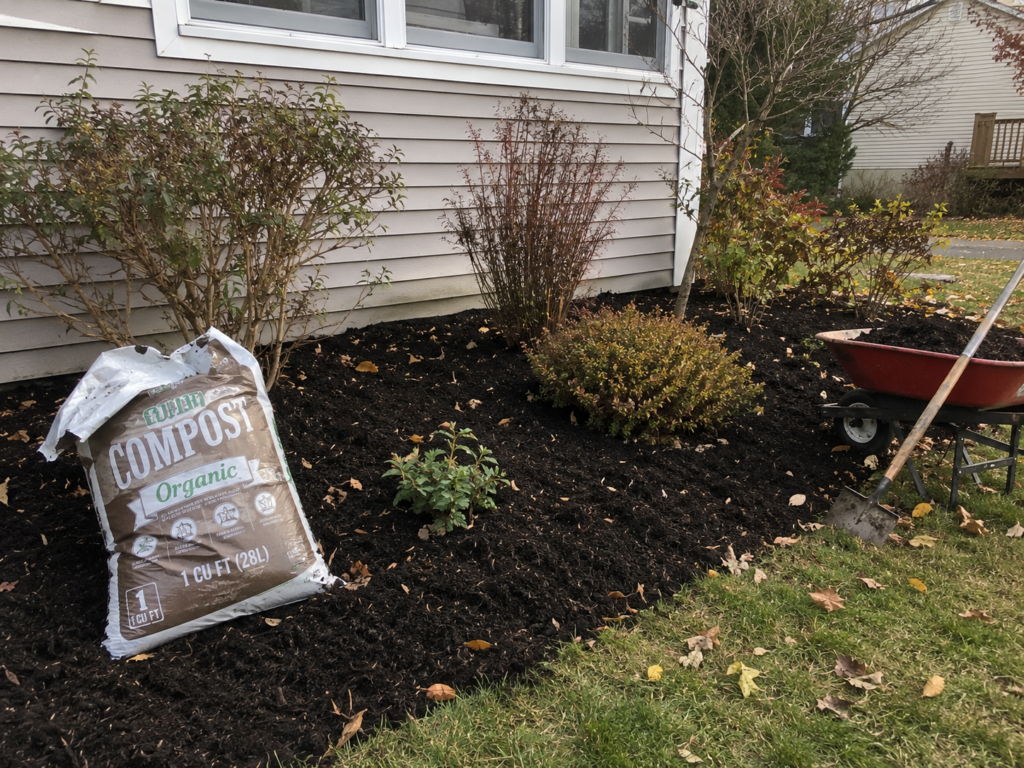
Why: Insulates roots before winter
Improves soil health
Protects newly planted trees and shrubs
Pro Tip:
Think of fall compost as a savings account for your garden. You’re investing in healthier soil now so your plants can benefit next season. Many gardeners call fall compost “nature’s slow-release fertilizer” because it continues improving soil all winter long, giving plants a head start when spring arrives.
Peastone Dressings: Everything You Need to Know
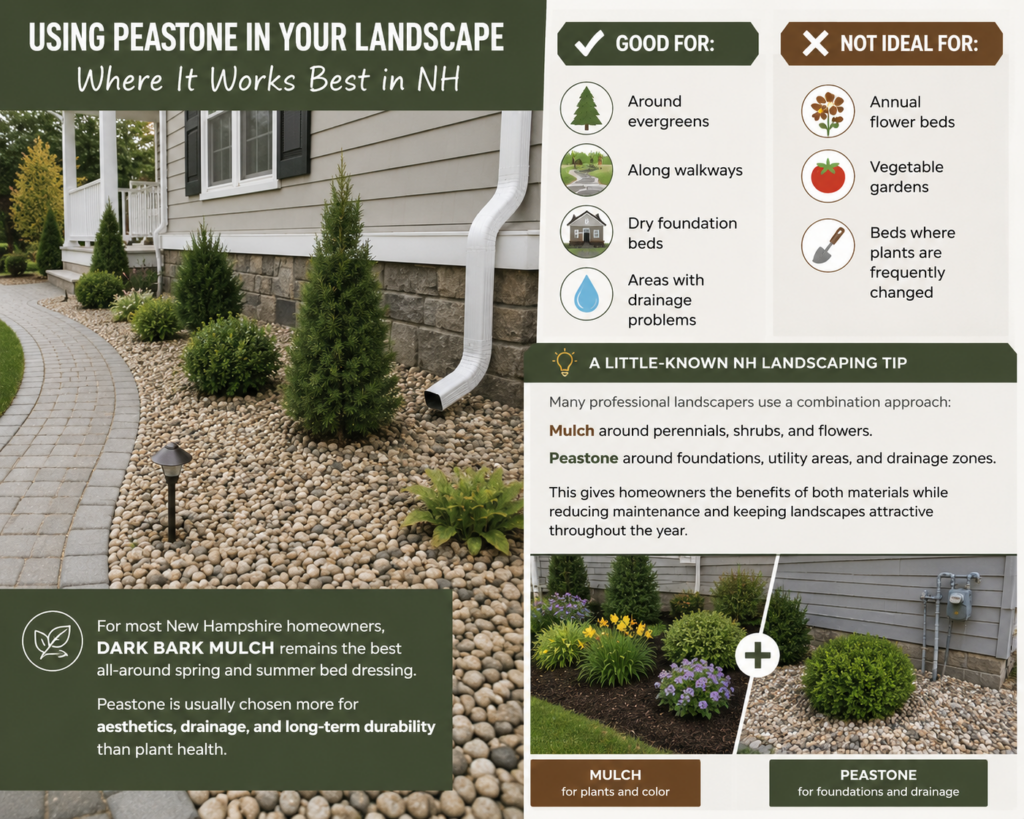
Some Pro Tips and Facts about Peastone:
Fun Fact: Peastone was originally popularized for practical drainage applications, but many homeowners now choose it primarily for its clean, polished appearance and long-term durability.
Little Known Fact: Unlike organic mulches, peastone does not break down or fade significantly, which means it can last for many years with minimal maintenance.
Little Known Fact: Peastone absorbs and releases heat more than mulch, making it a better choice for drainage and appearance than for moisture-loving plants.
Pro Tip: Installing landscape fabric beneath peastone can reduce weed growth and help prevent the stones from sinking into the soil over time.
Did You Know? Peastone can help improve drainage around foundations by allowing water to move through the stone instead of pooling on the surface.
Did You Know? Many professional landscapers use peastone around utility boxes, air conditioning units, and foundation walls because it stays in place and provides easy access for maintenance.
Pro Tip: One of the most attractive low-maintenance landscape designs combines dark bark mulch in planting beds with peastone around foundations and drainage areas. This creates visual contrast while giving each area the material best suited for its purpose.
Pro Tip: Peastone works especially well near downspouts and sump pump discharge areas where traditional mulch may wash away during heavy New Hampshire rainstorms.