Most of us grew up hearing that finding earthworms in the garden is a good thing. But there is one worm New Hampshire homeowners should learn to recognize. Invasive jumping worms, sometimes called snake worms, are invasive earthworms originally from Asia. Unlike familiar earthworms that tunnel deeper into soil, jumping worms live close to the surface and rapidly consume leaf litter and other organic material. According to UNH Cooperative Extension’s guide to jumping worms, they can dramatically change the upper layer of soil. This potentially affects the plants and organisms that depend on it.
How to Identify
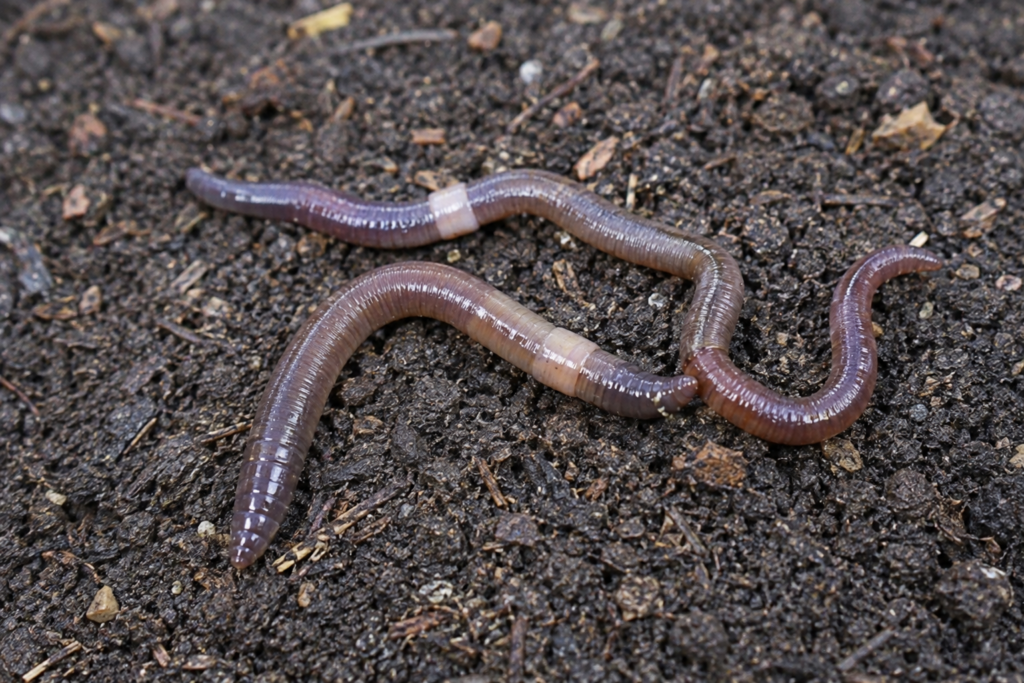
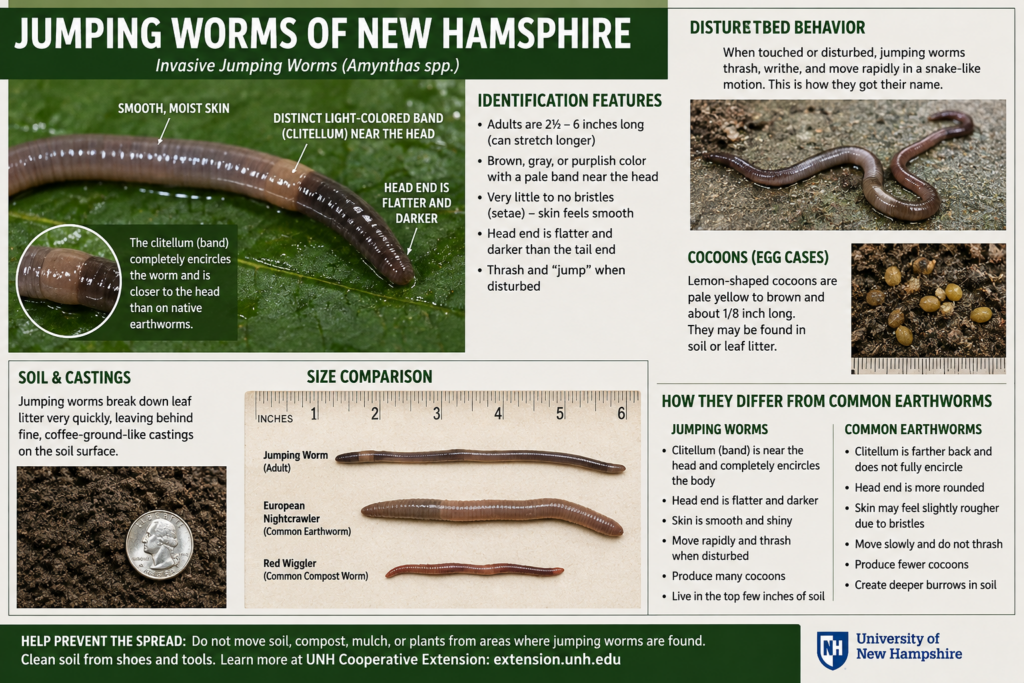
One of the easiest clues may actually be the soil rather than the worm. An area with jumping worms can develop loose, grainy soil that resembles coffee grounds. You might also notice garden mulch or leaf litter disappearing unusually quickly. Adult jumping worms are generally brown to gray with a smooth, light-colored band near the head that completely circles their body. They also behave differently from typical garden worms. When disturbed, they can thrash vigorously and move across the soil in an almost snake-like motion. UNH Extension provides additional identification tips in its jumping worm identification guide.
Why Does This Matter for Your Landscape?
Researchers are still determining exactly how jumping worms affect different soils and ecosystems, but studies show they can change soil chemistry. A 2024 peer-reviewed study, Testing the Impacts of Invasive Jumping Worms at Their Northern Range Limit, found significant effects on soil nitrogen at a residential property in New Brunswick. However, researchers did not find significant effects on total soil carbon or the abundance of European earthworms. Another peer-reviewed study of invasive Amynthas jumping worms and soil nutrients found changes in important nutrients including potassium, calcium, magnesium and phosphorus. Some effects, however, varied by worm species and location. This is an important reminder that the science is still developing. Also, the effects of jumping worms aren’t identical everywhere.
How to Prevent The Spread
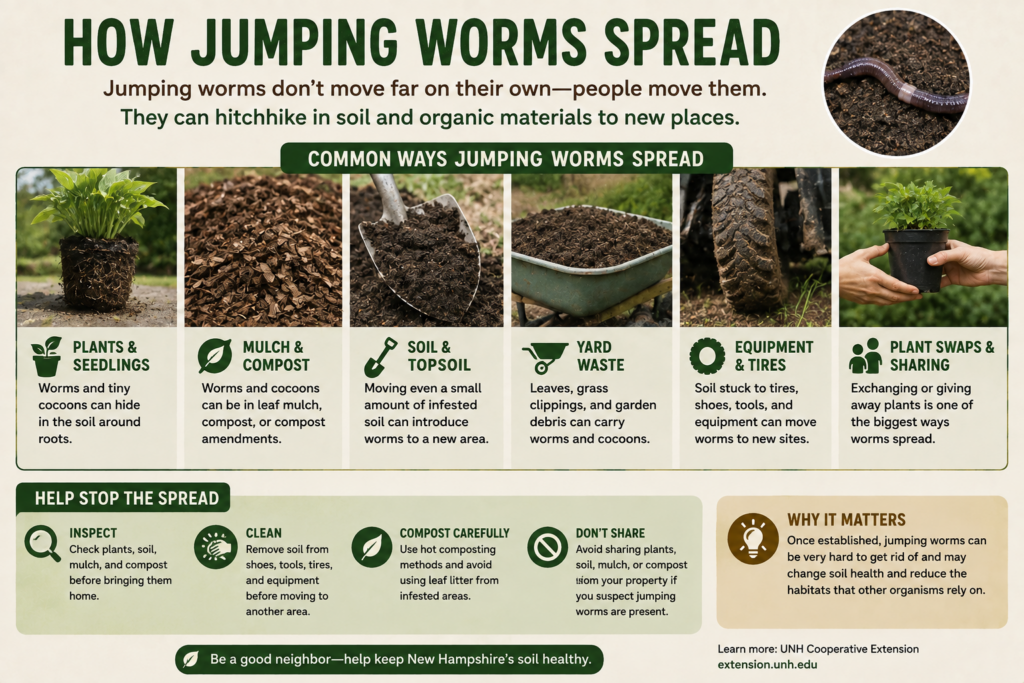
For New Hampshire homeowners, prevention is particularly important. Jumping worms and their cocoons can potentially be moved from property to property through soil, plants, compost and mulch. Before bringing these materials into your landscape, take a moment to inspect them. Be especially careful when dividing and exchanging plants with friends or participating in plant sales. If you suspect jumping worms are already on your property, avoid moving potentially contaminated soil, compost or plants to another yard. You can also contact the UNH Extension Yard & Garden Infoline for help with identification and gardening questions.

Do Not Panic!
Finding jumping worms doesn’t mean you have to give up on your garden. It does mean this is one invasive species worth watching for while you’re weeding, mulching, planting or dividing perennials. Sometimes good landscaping isn’t only about what you add to your yard. It’s also about noticing what has arrived unexpectedly and taking simple steps to prevent it from reaching the next property.