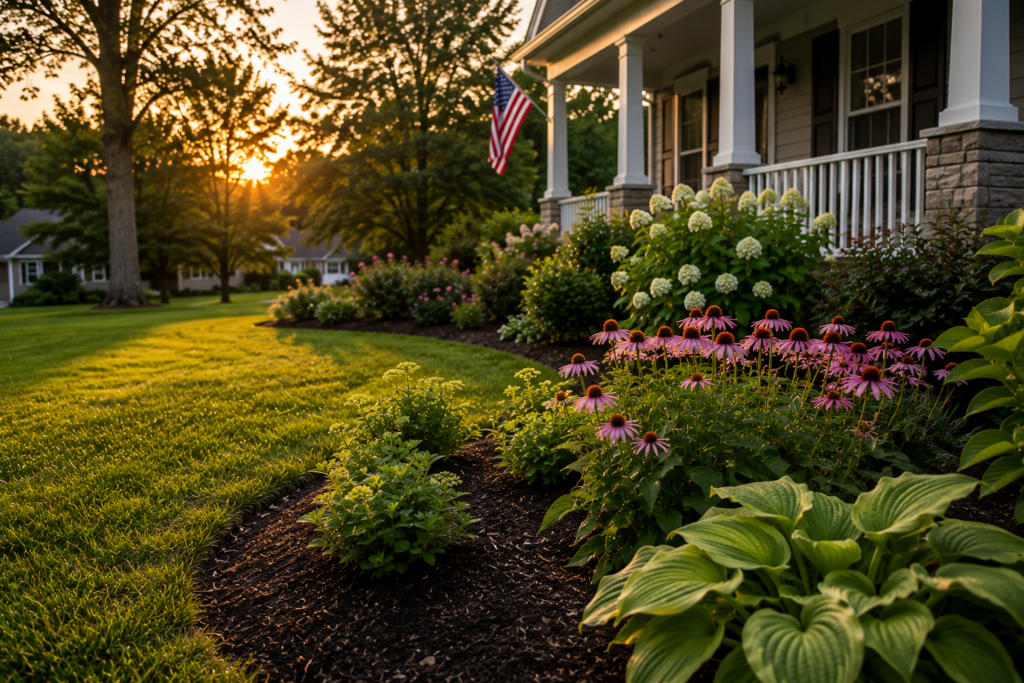
As summer begins to wind down, now is the perfect time to prepare your landscape for the next season. Late August and early September are some of the best months of the year for lawn recovery and landscape improvements in New Hampshire. Taking care of a few key tasks now can help repair damage from summer heat while setting your lawn and gardens up for a healthier fall and an even stronger spring next year.
End of Summer Lawn Care
One of the first things to check is your lawn. If the summer heat has left behind thin areas or brown patches, don’t rush to reseed just yet! Wait until daytime temperatures begin to cool, then overseed those problem spots while the soil is still warm.
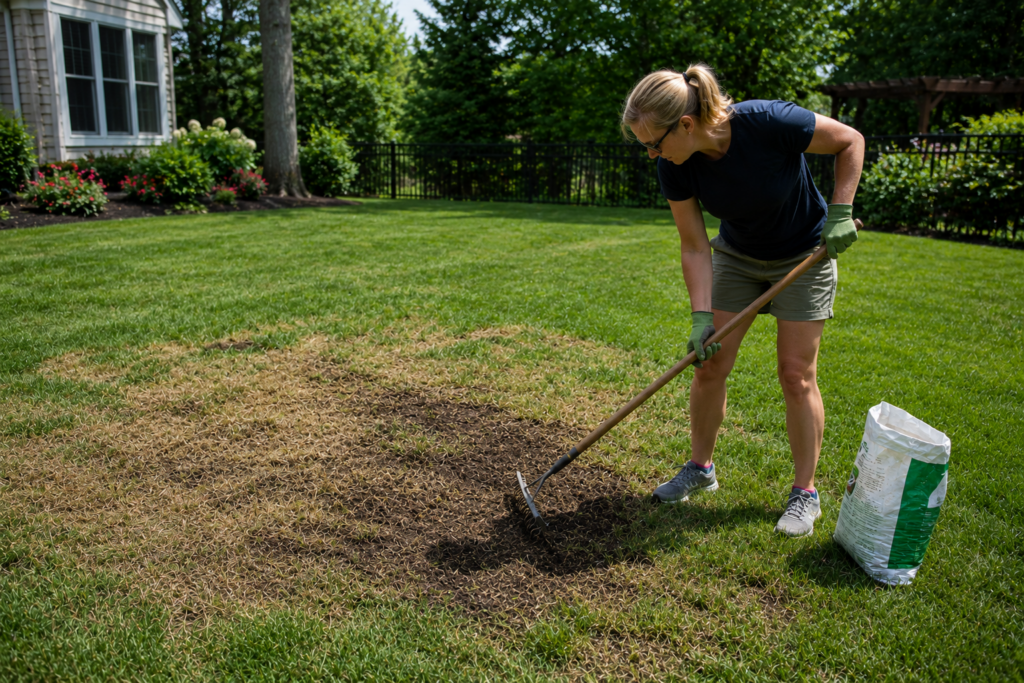
This combination of warm soil and cooler air creates excellent conditions for grass seed to germinate. Before seeding, loosen the top inch of soil with a rake. This simple step greatly improves seed-to-soil contact and often leads to better results than simply scattering seed over existing grass!
Adjust Sprinklers, Refresh Mulch, Remove Weeds
Late summer is also an excellent time to inspect your irrigation system before fall arrives. Look for sprinkler heads that have shifted, clogged nozzles, or areas that consistently stay too wet or too dry. For a more information about irrigation checks, click here to visit another post where we talk all about it! Making adjustments now allows your lawn to recover while temperatures are still warm.
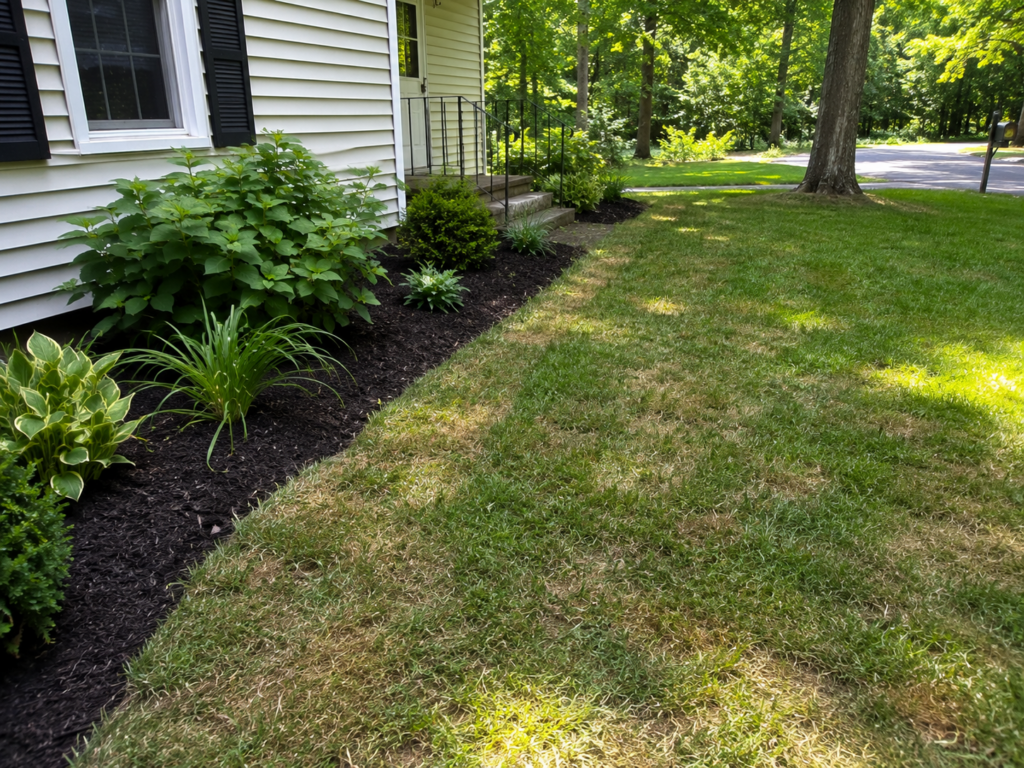
At the same time, refresh any mulch that has thinned over the summer and remove weeds before they have a chance to drop seeds for next year. A fresh layer of mulch can also help keep soil temperatures more consistent during the transition into cooler weather.
Deeply Water Trees and Shrubs
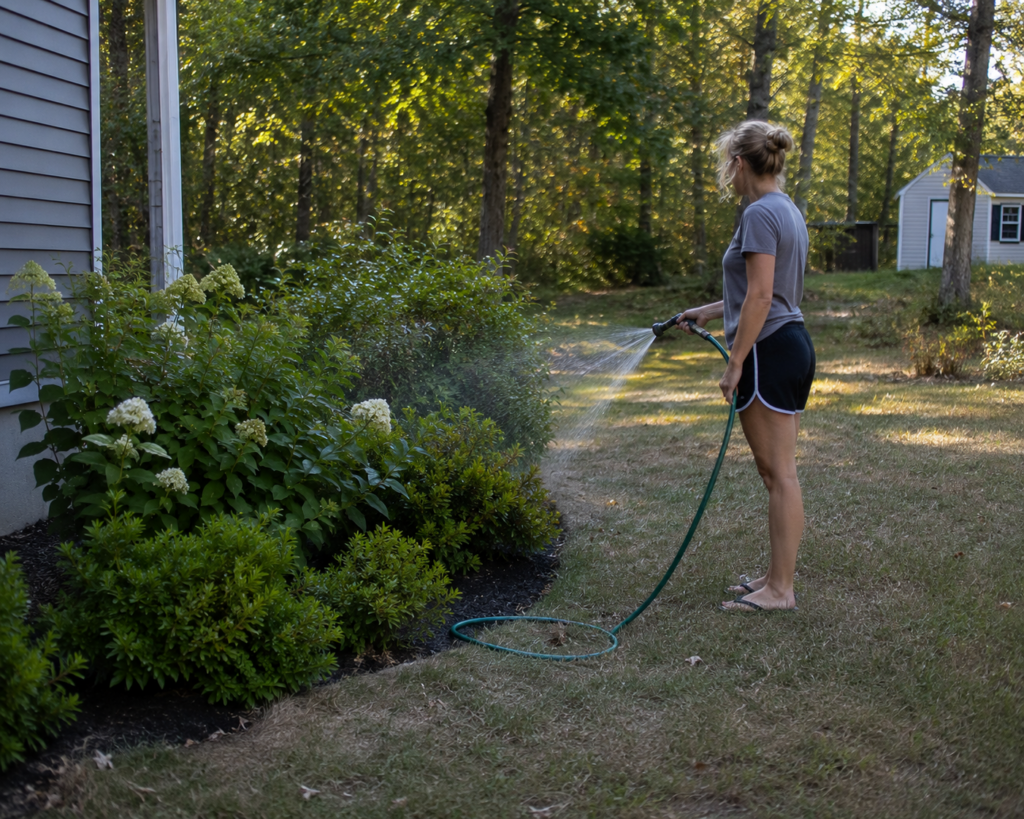
Don’t forget about your trees and shrubs. While lawns often receive most of the attention, woody plants continue developing roots well into the fall. Deep watering during dry periods can help them enter winter in better condition. It’s also a good time to remove dead branches, inspect for storm damage, and keep fallen leaves from piling up around the base of plants. One little-known tip is to avoid heavy pruning in late summer. Pruning encourages tender new growth that may not have enough time to harden off before the first frost, making it more vulnerable to winter damage.
Preparing your landscape now can save time and money later. Small maintenance tasks completed before fall often prevent larger problems in the spring. Whether it’s repairing irrigation, refreshing mulch, planning for aeration, or getting ready to overseed, a little attention now helps your entire landscape transition smoothly into the next season.
Late Summer Pro Tips
• Walk your yard after a heavy rain. Areas that stay soggy for more than 24 hours are good candidates for drainage improvements before winter and next spring’s snowmelt.
• Mark sprinkler heads with small landscape flags before leaves begin falling. They are much easier to find when it’s time to winterize your irrigation system.
• If your lawn struggled this summer, consider having a soil test done before applying fall fertilizer. Many lawn problems are caused by nutrient imbalances or soil pH rather than a lack of fertilizer.
• Take photos of your garden beds while everything is still growing. It’s much easier to remember where perennials are located when planning spring planting or dividing plants next year.
• Start removing weeds now, even if they seem harmless. Many common New Hampshire weeds produce thousands of seeds in late summer that can become next year’s biggest lawn and garden problem.